Old Houses in Crete Can Be Excellent Projects — If You Evaluate Them Properly
Traditional village houses and older properties can offer character and a lower acquisition price, but the real opportunity is determined by structure, legality, access, utilities and the cost of making the building comfortable and compliant.
The Cheapest Purchase Is Not Always the Cheapest Home
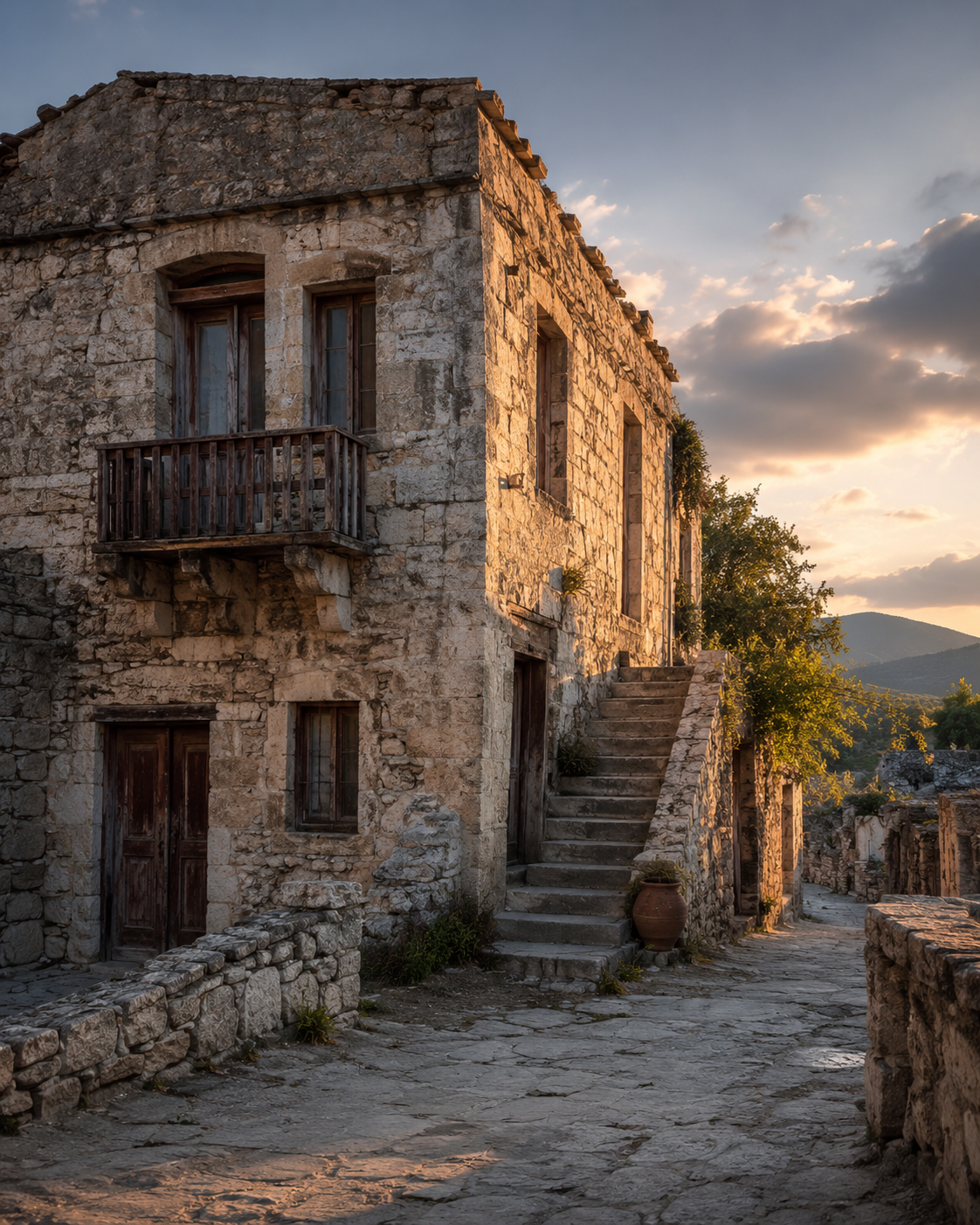
Old houses in Cretan villages can be appealing because the purchase price may be much lower than a finished modern villa. Some also have existing utility connections or a useful building footprint. But the only meaningful comparison is total project cost: purchase, legal and engineering work, structural or envelope repairs, technical installations, interiors and finishing.
A well-chosen old property can still be an excellent strategy. The point is to choose it with open eyes and a realistic scope.
What Can Change the Budget Dramatically?
Roof & Structure
Traditional buildings can hide expensive structural or roof work. Formal conclusions belong to the engineer, but visible condition matters from day one.
Moisture
Stone and older masonry need correct moisture management. Covering a damp wall with a new finish simply hides the problem.
Access
Narrow village roads, stairs and limited vehicle access can affect material handling, equipment and labour logistics.
Utilities
Existing power and water can be valuable, but the installation may still need complete replacement or capacity upgrades.
Layout
Old room arrangements may not suit modern living. A good plan can improve flow while respecting structural and architectural constraints.
Character
The goal is not to turn every stone house into a generic apartment. Modern services can be introduced while preserving the identity that made the property attractive.
Use Modern Methods Where They Make Sense
Drywall systems, carefully planned service zones, modern electrical and plumbing infrastructure, efficient lighting and smart controls can make an older property far easier to live in. The right solution depends on the building, and heritage or listed properties may carry additional restrictions that must be respected.
Frequently Asked Questions
Is an old house automatically cheaper than a new build?
Not automatically. The purchase price may be lower, but structural work, roofing, access, utilities, moisture, legalisation or specialist restoration can change the total budget. The opportunity should be evaluated as a complete project.
Can a stone house be modern inside without losing its character?
Often yes. A good design can preserve the visible stone and traditional identity while integrating modern electrical, plumbing, insulation, bathrooms, kitchens and interior systems.
What should be checked before buying an old village house?
The legal and engineering team should check ownership and legality, while the technical review should examine structure, roof, moisture, utilities, access and the realistic scope of renovation.
Can TASKONET coordinate the works after purchase?
Yes, once the technical scope and required engineering or approvals are defined, TASKONET can coordinate the relevant crews and technical works.
More Property Support in Crete
Have a property, budget or location in mind?
Send the basic information and we will help you identify the most practical technical next step.